UN Global Compact  |  CEO Water Mandate

Great Britain Colombia Brazil

Mid-South Sustainable Rice Water Stewardship Program

<% join_label %>

Mid-South Sustainable Rice Water Stewardship Program

Show Full Map
Amazon
Water Stress:
Area: 5888268 km2
Countries:
Brazil; Peru; Suriname; France; Colombia; Guyana; Bolivia; Venezuela; Ecuador
Cities:
Santa Cruz; Manaus; La Paz
PFAF ID:
HydroBasin Level:
Major Basin:
Sub-basin:
Show Selected Basin  |  Clear Selection
Baseline Water Stress:
Water Quality Stress:
Sanitation Access Stress:
Click to view individual basin.
Location
Click Icon to Show on Map
City & Country
,
()

Quick Info

Countries: United States of America
Basins: Mississippi (427)
Language: English
Start & End Dates: Sep. 01, 2019  »  Ongoing
Contextual Condition(s): Quantity
Additional Benefits: Better / more data on river basin conditions, Long-term partnership(s) created, Raised awareness of challenges among water users
Beneficiaries: Agricultural growers
Planning & Implementation Time: More than 3 years
Primary Funding Source: corporate
Project Source: User
Profile Completion: 54%

Project Overview

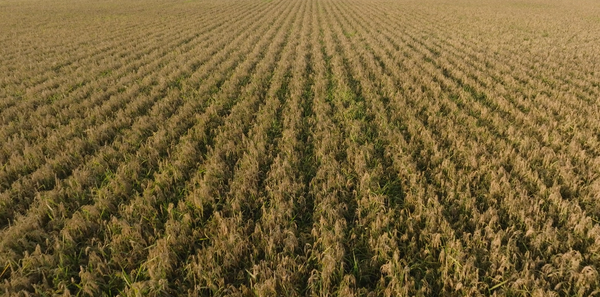
Terion’s Mid-South Sustainable Rice Water Stewardship Program is a scalable program focused on accelerating adoption of water-efficient rice production practices across key rice-growing regions of Arkansas, Louisiana, Mississippi, and Missouri. The program represents a comprehensive approach to sustainable agriculture that combines rigorous environmental science with farmer-centric program design to drive measurable impact across water conservation and greenhouse gas emissio…

Read More

Terion’s Mid-South Sustainable Rice Water Stewardship Program is a scalable program focused on accelerating adoption of water-efficient rice production practices across key rice-growing regions of Arkansas, Louisiana, Mississippi, and Missouri. The program represents a comprehensive approach to sustainable agriculture that combines rigorous environmental science with farmer-centric program design to drive measurable impact across water conservation and greenhouse gas emissions reduction. The program builds on more than seven years of experience implementing sustainable sourcing programs with leading global brands such as Kellanova, Mars, Anheuser-Busch, Walmart, Purina, and Gerber. The project combines four core elements: rigorous environmental science, digital monitoring and verification systems, farmer incentive payments, and direct agronomic support. Participating growers are incentivized to adopt practices such as alternate wetting and drying (AWD), furrow irrigation, and other water-efficient management approaches that reduce irrigation demand and improve water stewardship outcomes. Terion’s field specialists provide enrollment support, agronomic guidance, practice verification, and ongoing engagement throughout the growing season. This farmer-centric model has contributed to strong grower participation and retention, supporting lasting practice adoption over time. The program demonstrates exceptional farmer retention driven by the dual benefits of premium payments and tangible on-farm improvements. As farmers gain familiarity with practices like alternate wetting and drying, zero-grade field design, and furrow irrigation over multiple crop cycles, these practices become highly sticky and lead to enduring change in the region, as evidenced by the increase in AWD adoption in Arkansas from less than 2% in 2019 to 3.8% in 2022.

Latest updates

No current notifications are found for the projects, organizations, and other topics you are currently following.

Following

Basin and/or Contextual Conditions: Quantity
Project Benefits: Better / more data on river basin conditions, Long-term partnership(s) created, Raised awareness of challenges among water users
Indirect or Direct Beneficiaries: Agricultural growers
Months & Implementing: More than 3 years
Primary Funding Source: Corporate funding

Project Narrative

Terion's Mid-South Rice Program serves as a landscape-level program through which individual corporate sponsors fund discrete projects focused on specific grower cohorts, geographies, or sustainability objectives. Sponsor investments directly support grower incentives, technical assistance, enrollment, monitoring, and outcome quantification. Since 2019, Terion (formerly Source by Indigo Ag) has consistently expanded its footprint in the rice sector by onboarding new corporate partners each year to the program.The program has generated approximately 49.6 million gallons of water savings across crop years 2020-2024 (49,636,000 gallons, to be precise). Terion verifies practice implementation and quantifies water and GHG outcomes using a monitoring-modeling approach that leverages verified grower data, site-specific weather and soils data, peer-reviewed research and literature data, and field-scale models. Terion employs a modeling methodology specifically designed for rice cultivation in the Mid-South region. It consists of three main components: cradle to farm gate non-land GHG emissions, land GHG emissions using statistical emissions models, and a field-scale water model. This approach follows IPCC Guidelines for estimating greenhouse gas emissions and includes region-specific adjustments based on findings from published studies. To determine the environmental impacts achieved through a program, the modeling framework described above is used to simulate environmental outcomes under the distribution of rice production practices in the region published in the annual B.R. Wells Arkansas Rice Research Studies. These simulations apply the same soil and weather conditions as fields enrolled in a program to establish a season and program specific baseline. The project’s impact is evaluated as the difference between the project emissions (or water use) and the baseline emissions (or water use).  When new sponsors initiate investment in the program, water benefit estimates are initially generated using the Curve Number (CN) methodology to provide an assessment of anticipated outcomes. For funded projects, Terion can additionally apply process-based watershed modeling, including SWAT, to quantify final outcomes and evaluate water quality benefits where desired.

Partner Organizations


The future of agriculture depends on making informed decisions in an increasingly complex world. Terion AI (Terion) brings clarity to this complexity through independent agricultural intelligence. We provide the reliable digital infrastructure farmers, businesses, and governments need to establish a … Learn More

Joan Abbott
Primary Contact  

   Loading Lessons